Gold IRAs
IRA-Approved Gold: Which Coins and Bars Qualify, and Which Don't
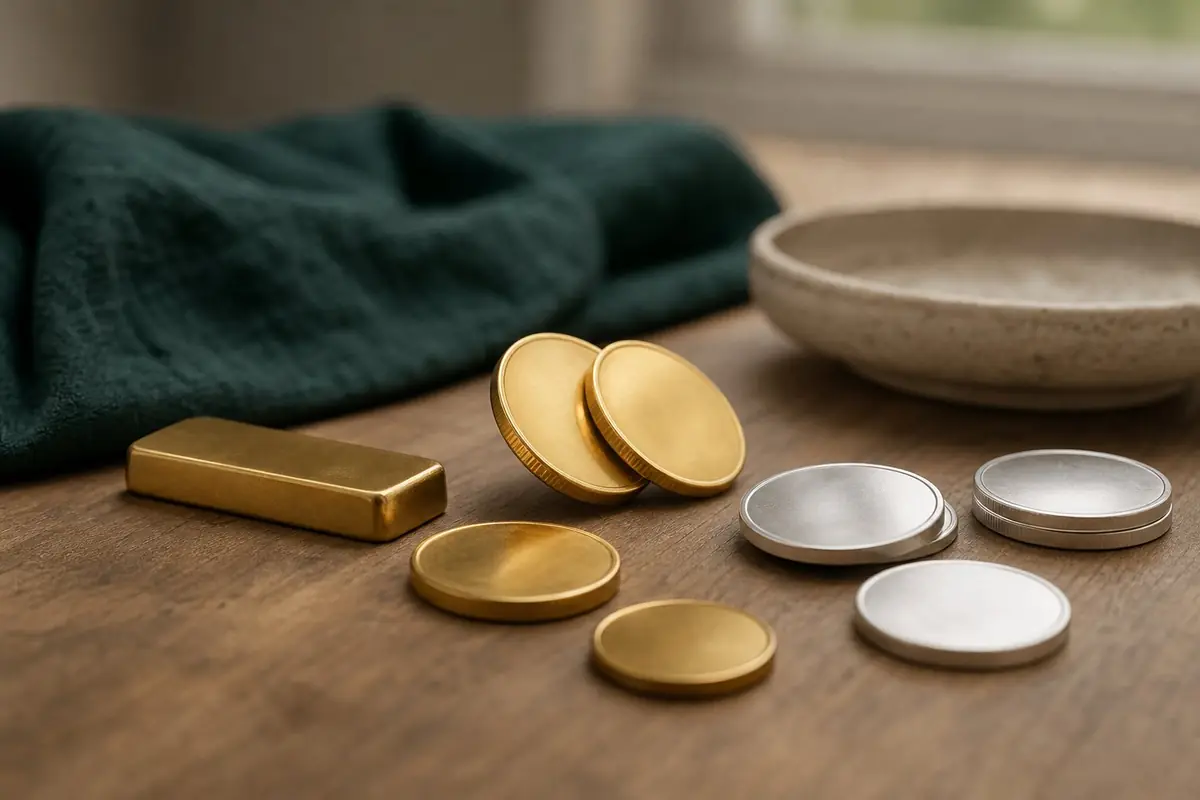
An IRA can hold gold that passes one of two tests in the tax code: it's a U.S. Mint coin the statute names, or it's bullion at least .995 fine. That covers the most widely traded bullion coins and bars. A few famous coins fall outside it, and this page shows which are which and how to confirm a product before you buy.
The short version
- The rule is section 408(m)(3) of the Internal Revenue Code. No government office publishes an official list of "IRA-approved" products.
- American Gold Eagles are 22-karat and qualify anyway, because the statute names them.
- Other gold has to be .995 fine or better. Silver needs .999, and platinum and palladium need .9995.
- American Gold Buffalos, Canadian Maple Leafs and .995 bars qualify by fineness. The Krugerrand, the British Sovereign and pre-1933 U.S. gold coins don't.
- Each custodian keeps its own accepted list, so get a yes in writing before the IRA pays for anything.
What gold can you hold in an IRA?
Start with what the law bans. Section 408(m) says an IRA that buys a "collectible" is treated as having distributed the cost to its owner, and its definition of a collectible includes "any metal or gem" and "any stamp or coin."
Paragraph (3) then carves out two exceptions.
- Named coins. Gold coins described in 31 U.S.C. 5112(a)(7) through (10), silver coins described in 5112(e), platinum coins described in 5112(k), and coins issued under the laws of a state.
- Fine bullion. Gold, silver, platinum or palladium bullion at least as fine as a regulated futures exchange requires for delivery, as long as the IRA's trustee has physical possession of it.
The second test doesn't print a number. It borrows the exchanges' delivery standards. The CME Group rulebooks set those at a minimum of 995 fineness for gold (COMEX chapter 113), 999 for silver (COMEX chapter 112), and 99.95% pure for platinum and palladium (NYMEX chapters 105 and 106). Our precious metals IRA guide has the table showing where each figure comes from.
IRS Publication 590-A puts the result in one line: an IRA can invest in one, one-half, one-quarter or one-tenth ounce U.S. gold coins, one-ounce silver coins minted by the Treasury, certain platinum coins, and certain gold, silver, palladium and platinum bullion.
IRA-eligible gold coins and bars, plus the other three metals
These products meet the legal test, and here's the reason each one passes. Your custodian still has to accept the specific item. The fineness figures come from the statute or from the issuing mint or refiner.
| Product | Fineness | Why it qualifies |
|---|---|---|
| American Gold Eagle (1, 1/2, 1/4 and 1/10 oz), U.S. Mint | .9167, or 22-karat | Named in the statute: 31 U.S.C. 5112(a)(7) to (10) |
| American Gold Buffalo (1 oz), U.S. Mint | .9999 | Meets the fineness test. It's described in 5112(a)(11) as 99.99 percent pure gold, and that isn't one of the named paragraphs |
| Canadian Gold Maple Leaf, Royal Canadian Mint | .9999 | Meets the fineness test |
| Gold Britannia dated 2013 or later, Royal Mint | .9999 | Meets the fineness test |
| Gold bars and rounds | .995 or better | Meet the fineness test, if the maker is one your custodian accepts |
| American Silver Eagle (1 oz), U.S. Mint | .999 | Named in the statute: 5112(e). It also meets the fineness test |
| Silver bars and rounds | .999 or better | Meet the fineness test |
| American Eagle platinum coin, U.S. Mint | Set by the Mint; the statute gives no figure | Named in the statute: 5112(k), which covers both bullion and proof platinum coins |
| Canadian Platinum Maple Leaf; Australian Platinum Kangaroo | .9995 | Meet the fineness test |
| American Eagle palladium coin, U.S. Mint | .9995, set in 31 U.S.C. 5112(a)(12) | Meets the fineness test. No palladium coin is named in section 408(m) |
One wrinkle. The second test says "bullion" and doesn't list products. High-purity bullion coins such as the Buffalo and the Maple Leaf come in under it alongside bars, and the custodian is the one who applies the test to a given item. That's one more reason to get a custodian's written yes.
The statute's fourth category, coins issued under the laws of a state, comes up rarely. Ask a custodian before you assume any state-issued piece is accepted.
If you want the background on the coins themselves, see our guide to the best-known gold coins. For bars, gold bar sizes explains what each weight is used for.
Why is a 22-karat American Gold Eagle allowed?
Because Congress wrote it in by name.
The one-ounce coin in 31 U.S.C. 5112(a)(7) weighs 33.931 grams and contains one troy ounce of fine gold, which is 31.103 grams. Divide one by the other and you get 91.67%. The rest is alloy.
That's below .995. It doesn't matter, because section 408(m)(3)(A)(i) excepts "a gold coin described in paragraph (7), (8), (9), or (10) of section 5112(a)" without any reference to purity. You still get a full ounce of gold in a one-ounce Eagle. The coin just weighs a little more than an ounce.
Which well-known products don't qualify?
| Product | Fineness | Why it fails |
|---|---|---|
| Krugerrand (South Africa) | 22-carat, about .9167 | Below .995, and it isn't a U.S. coin named in the statute |
| British Sovereign | .9167 | Same two reasons |
| Gold Britannia dated before 2013 | .9167 | Below .995. The Royal Mint moved the coin to .9999 in 2013 |
| Pre-1933 U.S. gold coins, such as the $20 double eagle | .900 | Below .995. They're U.S. coins, but 5112(a)(7) to (10) describe the modern Gold Eagle only |
| U.S. commemorative $5 gold coins struck in 90% gold | .900 | Below .995 and not among the named coins |
| U.S. dimes, quarters and half dollars from before 1965 | .900 silver | Below .999 |
| Silver Britannia dated before 2013 | .958 | Below .999 |
| Sterling silver, gold jewelry, rare and ancient coins | Varies | Collectibles under 408(m)(2), with no exception that fits |
The old U.S. gold coins catch people out. They came from the U.S. Mint and they contain plenty of gold, so they feel like they ought to count. The Coinage Act of 1837 set the standard for U.S. gold and silver coins at 900 parts pure metal in 1,000. That misses the fineness test, and the statute's named paragraphs don't reach back to them.
None of this makes these bad coins. They're fine to own with money outside an IRA. They just can't go in one.
What about proof coins?
The statute describes the named coins by size, weight and metal content. It says nothing about finish, and 5112(k) mentions proof platinum coins outright. So proof versions of the American Eagles fit the same legal description as the bullion versions, and custodians commonly take them.
Eligible and well priced are separate questions. Ask for the price of each, and the buyback price of each, on the same day. Our guide to coins vs. bullion explains how the pricing differs.
The law sets the test. Your custodian keeps the list.
Any "IRA-approved" list you find online was written by a company. The IRS doesn't publish one.
Custodians add their own conditions on top of the statute. A custodian may accept bars only from refiners it recognizes, and it can turn down a product because of its packaging, its size, or because its depository doesn't handle it. Two custodians can give different answers about the same bar.
So the dealer's word isn't the one that counts. Before the IRA pays, send the custodian the exact product name, the mint or refiner, the year if it matters, and the weight, and ask for a written confirmation that it's accepted. The same goes for silver and for platinum.
Who has to hold the metal in a physical gold IRA?
The trustee. The bullion exception applies only "if such bullion is in the physical possession of a trustee," meaning a bank or another trustee the IRS has approved. In practice the custodian has a depository hold it, and you choose between pooled and separate storage, which we compare in segregated vs. commingled storage.
Named coins don't escape this. In McNulty v. Commissioner (2021), the U.S. Tax Court dealt with American Eagle coins bought through an IRA-owned company and kept in the owner's home safe. It held that she'd received taxable distributions equal to the coins' cost when she took possession of them.
Want coins in your own hands? That's a purchase with money outside the IRA, and none of the fineness rules apply to it. See buying physical gold outside an IRA.
What happens if an IRA buys something that doesn't qualify?
Section 408(m)(1) answers it. The purchase "shall be treated" as "a distribution from such account in an amount equal to the cost to such account of such collectible."
The IRS page on collectibles in retirement accounts fills in the rest:
- The distribution counts in the year the item was bought, at what the account paid for it.
- It's reported on Form 1099-R.
- It's generally taxed as ordinary income, and the 10% additional tax on early distributions can apply if you're under 59½.
- When the item later comes out of the account for real, the amount already taxed isn't taxed again.
Say your traditional IRA pays $20,000 for coins that turn out not to qualify. You're treated as having withdrawn $20,000 that year, whatever the coins are worth afterward. If you think this has happened to you, talk to a tax professional before you do anything else with the account.
Common questions
Is there an official list of IRA-approved gold?
The tax code sets a test, and IRS Publication 590-A summarizes it in a sentence. The government doesn't publish a product list. Lists come from custodians and dealers, and they differ, so confirm each item with your own custodian in writing.
Which IRA-eligible gold coins are the common ones?
American Gold Eagles, American Gold Buffalos, Canadian Gold Maple Leafs and other .9999 bullion coins from national mints. The Eagle qualifies by name in the statute, and the others by fineness.
What counts as IRA-approved silver?
Silver that's .999 fine or better: the American Silver Eagle, and bars and rounds from makers your custodian accepts. Pre-1965 U.S. silver coins are 90% silver and don't pass.
Can I put Krugerrands in a physical gold IRA?
No. Krugerrands are for money outside an IRA. The coin is 22-karat, which is below .995, and it isn't one of the U.S. coins the statute names. The American Gold Eagle is the same purity and qualifies because the law lists it.
Can I move gold I already own into my IRA?
IRA contributions have to be cash, and selling your own property to your IRA is a prohibited transaction. So the IRA buys its metal from an unrelated seller.
Do the same rules cover a Roth IRA?
Yes. Section 408(m) applies to individual retirement accounts of either kind. How a deemed distribution is taxed in a Roth depends on the Roth rules, so ask a tax professional.
We base our guides on primary sources such as the IRS, the Department of Labor, and federal regulators. Read our editorial policy. Spot an error? Tell us.